Throughout the past couple of classes, we have discussed the notion of media assemblages. As stated in the blog post assignment, a media assemblage, or media ecology, can be described as "an assemblage of media forms and communicative practices which creates a specific media environment...media assemblages and ecologies are constituted by several distinctive sets of articulations". I believe that within the set of articulations, the third articulation best describes the relation between Martin Luther's 95 Theses and the viral meme character, "Pepe the Frog". The specific meme that I have chosen for this assignment is "Pepe the Frog" as Donald Trump, within his presidential election this year.
The third articulation can be described as "how media artifacts and messages are brought into being and spread through a culture, community, or society, and is manifested in the spatio-temporal dynamics of relations of creativity and production, relations of distribution and circulation, and relations of consumption and reception". In relation to Martin Luther, his messages were able to be circulated throughout society by people who would share his messages.
Similar to Martin Luther's information, the Donald Trump "Pepe the Frog" meme became viral over social media as he tweeted it over twitter to his followers and supporters. These users that follow him began to retweet at a fast rate this meme allowing it to become viral. Users then began to create their own "Pepe the Frog" memes in support of Donald Trump's presidency campaign. In relation to the third articulation, the meme was able to be sent and received throughout online culture. The meme became a political symbol used by Trump supporters in order to spread their shared beliefs throughout the public domain of social media.
Monday, 14 November 2016

Pepe and Luther: Media Circulation Through Culture, Community, and Society
While the internet and social media are both ways of people communicating and spreading their ideas all over the world, with this mass of communication comes the ability to spread hate. The third articulation we discussed in class surrounds how “media artifacts and messages are brought into being and spread through a culture, community, or society, and is manifested in the spatio-temporal dynamics of relations of creativity and production, relations of distribution and circulation, and relations of consumption and reception”. When applying this concept to Donald Trumps presidential campaign and the meme Pepe the Frog, it can be found that once something goes viral, the meaning and context which is applied to it no longer remains in the hands of the creator. They ways in which the artifact is consumed and received can be further manipulated the more popular the artifact becomes and the range of audiences it is able to reach.
Luthers 95 theses went viral after he was no longer able to control the nature of his message and who it reached. The people who read his messages were what caused this mass spread. It worked within a “decentralized person-to-to person media system” where the audience decided what was worth sharing and had the ability to amplify particular messages (Standage, 53). Similar to social media today where people have the control over what is shared liked, and reblogged, increasing the reach of its message. In this process, meanings of artifacts have the ability to change according to to its viewers’ ideas. When Pepe went viral, his meaning changed as well. He became a symbol of hate, not his original intention as a symbol that celebrates peace, togetherness and fun. He began to be used as a political tool when Donald Trump tweeted a photo of himself as a version of Pepe (Williams, 2016). His image changed from that of just a sad frog to one representing messages of hate. Using Standage’s idea of synchronization of opinion, people use memes and other forms of media, such as Pepe, as a way to express their opinions which may be against the status quo. People then began to use Pepe to display these messages through out social media, displaying how media artifacts that are spread throughout our culture and society can develop new meanings depending how how they are consumed and received.
Works cited
Mele, C. (2016). Campaign Aims to Help Pepe the Frog Shed Its Image as Hate Symbol. New York Times.
Mele, C. (2016). Pepe the Frog Meme Listed as a Hate Symbol. New York Times.
Standage, T. (2013). Writing on the Wall. 48-63.
Williams, A. (2016). How Pepe the Frog and Nasty Woman Are Shaping the Election. New York Times.
Legitimizing Luther and Trump Through the Mode of Production
Martin Luther’s 95 theses and the rise
of Pepe the Frog in Donald Trump’s 2016 Presidential Campaign, they both
exemplify strong notions of different media ecologies. I will demonstrating the
ways in which media communication has been achieved in both of these instances
through the mode of production becoming a mode of communication in itself. Even
though the protestant reformation was in the 16th century and the
way in which the operation of the system of understanding operates, modes of
production still give an audience a sense of meaning and social practices
(Herman 2016).
The success of Luther’s 95 theses was a direct result of the technology
of the printing press because, without this mode of production the reformation that
changed the way people think and understood not only religion but also law and
order. The printing press and Luther reviled the way in which a decentralized,
person to person system of distribution was taken care of by citizens
themselves (Standage 53). Having information that could be found in stores and
villages all over was a key to unlocking how information could overcome special
bias. These pamphlets that took allowed information to be freely discussed
between people, which is a mode of accumulation because this discussion
promoted literacy in others. This is the most important thing that Luther did,
having a medium that reinforced the mode of communication in its production (Standage
55).
The ethno-nationalist meme of Pepe the frog, in relation to the president
elect Donald Trump is an example of a popular symbol and used it to spread
hate. The meme of Pepe the frog has since been added to the list of hate
symbols by the Anti-defamation League (Williams 2016). Basically Pepe was used
by white supremacist Trump supporters to spread propaganda. Images that support
trumps presidency and ideals like the wall, are surfacing with Pepe having
trumps unmistakable hair. This image of trump is an image of the mode of affect
that allows the people who support trump and others to see the meaning and
emotion that are all present in a meme. The production of this meme itself is
enough to reinforce communication within the support for trump, just like the swastika
and confederate flag. The mode of their production is at the same time communication
as a political calling card.
 |
| Blonde hair, blue eyes. Seems familiar. |
Works Cited
Herman, A. (2016, November 1). CS371. Waterloo:
Wilfrid Laurier University.
Standage, T. (2013). Writing on
the wall: Social media -- the first 2,000 years. New York: Bloomsbury.
Williams, A. (2016). How Pepe the Frog and Nasty Woman Are Shaping the
Election. The New York Times.
95 Theses & Pepe the Frog: Circulation
For this blogpost we are looking at media ecology and how it is a media form that creates a specific environment using the two examples of Martin Luther’s 95 Theses and the meme of Pepe the Frog during the 2016 Presidential election. Both these examples relate to the 3rd articulation we discussed in class which is concerned with “how media artifacts and messages are brought into being and spread through a culture, community, or society, and is manifested in the spatio-temporal dynamics of relations of creativity and production, relations of distribution and circulation, and relations of consumption and reception”.
It is strange to think about how things were spread and went viral before the rise of digital and social media. When Luther’s 95 Theses was created it caused a bit of a uproar. It spread extremely quickly, first within the academic fields but then much further. Quickly, copies began to spread in manuscript form and the broadsheets and pamphlets were popping up everywhere. (Standage, 2013, p. 52). Luther lost control of his message as it was spread everywhere. This message is argued to be the first message to go “viral”. As it took was for Luther to send it to someone for the cycle of circulation to begin.
Pepe the Frog, though a meme that has been around for years, was extremely popular during the 2016 presidential campaign. This meme became political when Donald Trump tweeted out a of photo of him as Pepe.

It was circulated all over social media and quickly became a symbol for this election. Twitter took the meme and made it something of their own. All over social media everyone was sharing and retweeting Pepe the Frog memes relating to the election. Instead of being handed out in print like the 95 Theses it was spread over social media. Trump supporters saw it as a way to band together with him and establish a connect. "Pepe had been a symbol of the disenfranchised, social outcasts. It was Trump’s natural audience." (Williams, 2016). This meme created a sense of community between Trump supporters.
Standage, T. (2013). Writing on the Wall: Social Media- The First Two Thousand Years. p. 52
Williams, A. (2016). How Pepe the Frog and Nasty Woman Are Shaping The election.
Pepe, Luther and Modes of Production
The way in which
media is produced and circulated can greatly effect it’s meaning, the emotions
it invokes as well as the capital and power that can be accumulated throughout
the production of said media. These articulations or connections between each
aspect make up media ecologies, or assemblages, incorporating every element of
the production of media. The process of a message or image becoming viral, can
be attributed to in the context of both Martin Luthers 95 theses and Pepe the
Frog the production of media the resulting alterations of the media and
responses.
The
social creation of meaning refers to the way in which meaning can be changed
through social practices such as the sharing and distributing of messages or
images. This can be seen through the meaning of Pepe the Frog changing through
Donald Trumps presidential campaign, prior to which Pepe the frog had been
drawn as Adolf Hitler and used by white nationalists to spread their beliefs,
during Trumps campaign, Pepe being drawn as him resulted in Pepe being
associated with the bigotry that Trump embodied.
 Pepe
the frog being associated so heavily with Trump has resulted in the original
image being classified as a hate symbol, as it was associated with images
reproduced by white nationalists. This articulation between texts resulted in
emotional responses from the public over social media as the symbol gradually,
resulting in negativity and dislike from the public. The social media ecology enables
the accumulation of both power as well as capital because of white nationalist
ideals being spread through the prevalence of the meme over websites such as
4chan and reddit.The creator of Pepe the frog has also been able to make money through the sale of
merchandise related to the meme.
Pepe
the frog being associated so heavily with Trump has resulted in the original
image being classified as a hate symbol, as it was associated with images
reproduced by white nationalists. This articulation between texts resulted in
emotional responses from the public over social media as the symbol gradually,
resulting in negativity and dislike from the public. The social media ecology enables
the accumulation of both power as well as capital because of white nationalist
ideals being spread through the prevalence of the meme over websites such as
4chan and reddit.The creator of Pepe the frog has also been able to make money through the sale of
merchandise related to the meme.


References
Frank, P.
(2016, September 30). The Strange Internet Journey Of Pepe The 'Chilled-Out ...
Retrieved November 14, 2016, from
http://www.huffingtonpost.com/entry/matt-furie-pepe-frog-meme_us_57ed3a6fe4b0c2407cdc4298
Herman, A. (2016).
Week 7 lecture 2 [Lecture Notes]
Mohn, T.
(2016, October 28). Long Before Twitter, Martin Luther Was a Media Pioneer.
Retrieved November 14, 2016, from
http://www.nytimes.com/2016/10/30/arts/design/long-before-twitter-martin-luther-was-a-media-pioneer.html?hp&action=click&pgtype=Homepage&clickSource=wide-thumb&module=mini-moth®ion=top-stories-below&WT.nav=top-stories-below&_r=1
Luther and Pepe: message, means and agents
In the 16th
century, people’s knowledge was based where they lived and the circumstances of
their home town. They usually did not go any further than 5 kilometres from
there (Herman) . The invention of
print meant an incredible change in the way people communicate and how
information spread. An example of this new form of communication is Luther with
his 95 theses.
Luther’s 95 theses
were a protest against the corruption of the Catholic church. He put his theses
on a piece of paper and nailed it to the doors of a church. The word spread
around about what he did and with the invention of the printing press, it was
easier and cheaper than ever to spread the theses around on pamphlets. The use
of the printing press also got many more agents involved in the process: people
who printed the pamphlets, delivered them and of course the people who read and
shared them because they shared
Luther’s opinion on the case. As a result, Luther’s theses spread among
thousands of people. It was seen as the origin of the reformation and Protestantism.
Luther managed to
spread his message among a huge amount of people, an impressive thing to do
without today’s social media platforms. Twitter, Facebook and other media forms
make it even more easy to spread content, by for example retweeting and sharing on Facebook. Take Pepe the Frog,
for example. He started out fairly innocent, but is now a well-known hate
symbol. This started out by Trump jr. posting a photoshopped movie poster on Instagram
with many prominent conservatives and Pepe the Frog (Zed) . This post even made
it to the news. After that, the meme got much attention because there were many
people against Trump. The message was a protest against Donald Trump and his
ideals. This was framed by the digital media in the form of a meme named Pepe
the Frog. There are some similar agents with Luther: people who read/see it and
share it. A different agent in the context of Pepe is the people who modified the meme.

Works cited
Herman, A. (2016, November 1).
CS371. Waterloo: Wilfrid Laurier University.
Zed, T. (2015). Pepe the Frog.
Retrieved November 14, 2016, from Know Your Meme:
http://knowyourmeme.com/memes/pepe-the-frog
Martin Luther's Theses and Pepe the Frog: The Spread of Media Artifacts and Messages Across Community, Culture, and Society
In my blog post I will discuss the
two media texts Martin Luther’s 95 theses and “Pepe the Frog” meme in the
context of Donald Trump’s 2016 Presidential campaign and how they relate in the
third articulation of media ecologies. The third articulation is mainly
concerned with how media messages are created and spread throughout a culture
and society and how they are manifested in relations of creativity and production, relations of distribution and circulation, and relations of consumption and reception.
 Martin
Luther’s theses gained momentum through the dissemination of pamphlets being
re-published and sold throughout different cities by different merchants. His
message became viral when other people were able to disseminate his message to
others for him as well, and the more popular it became the higher in demand for
production of these pamphlets were. This can be compared similarly to the meme “Pepe
the Frog” whose meme became a popular tool in Donald Trump’s political
campaign. Originally “Pepe the Frog” was a popular internet symbol that had been
around for years known as “Feels Bad Man” because of how sad he looked and has
been taken and re-symbolized by others on the internet for different purposes.
The dissemination of the Trump version of “Pepe the Frog” became viral when
Trump himself re-tweeted it. From their this character lead to “...a mass
influx of pro-Trump Pepes” (Williams, 2016). Williams argues that this meme
serves as a way for “Trump followers to echo their implicit support for
ultraconservative beliefs in public forums” (Williams, 2016).
Martin
Luther’s theses gained momentum through the dissemination of pamphlets being
re-published and sold throughout different cities by different merchants. His
message became viral when other people were able to disseminate his message to
others for him as well, and the more popular it became the higher in demand for
production of these pamphlets were. This can be compared similarly to the meme “Pepe
the Frog” whose meme became a popular tool in Donald Trump’s political
campaign. Originally “Pepe the Frog” was a popular internet symbol that had been
around for years known as “Feels Bad Man” because of how sad he looked and has
been taken and re-symbolized by others on the internet for different purposes.
The dissemination of the Trump version of “Pepe the Frog” became viral when
Trump himself re-tweeted it. From their this character lead to “...a mass
influx of pro-Trump Pepes” (Williams, 2016). Williams argues that this meme
serves as a way for “Trump followers to echo their implicit support for
ultraconservative beliefs in public forums” (Williams, 2016). 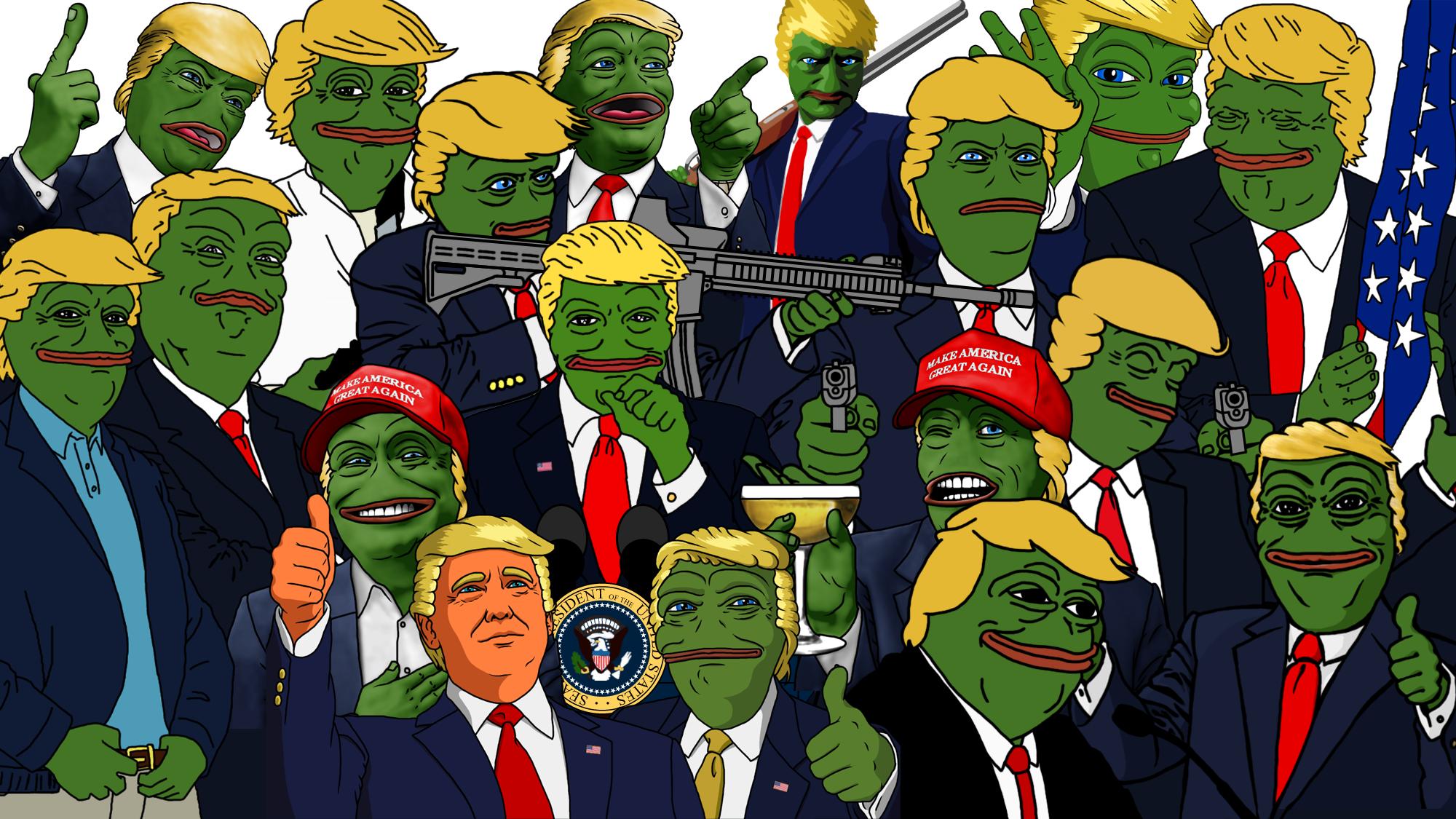
We can view this similarly to the way
in which Martin Luther’s theses were disseminated, people who supported it
would buy it, read it and disseminate it to others in support of Luther. The more
support both got, the more material was produced and disseminated, in the case
of Luther it would be the amount of pamphlets produced and for “Pepe the Frog”
the creation of new Trump memes.
Work Cited
Williams, A. (2016). How Pepe the Frog and
Nasty Woman Are Shaping the Election. The New York
Times.
Subscribe to:
Posts (Atom)