Monday, 14 November 2016

The Media Assemblage and Ecologies of Luther and Pepe the Frog

The first articulation of media assemblage and ecologies can be easily related to how Luther’s 95 thesis and Pepe the Frog went viral. The third media ecology is described as, “messages, means/medium, agents” (Herman, 2016). More specifically, this is the content of the message, the medium and technologies that mediate the messages and the agents who play a vital role in producing and distributing these messages for consumption. These factors have played a vital role in the popularity of Luther’s 95 thesis and the popularization and re-appropriation of Pepe the Frog.     
            Luther’s 95 thesis is often accredited to the first text to have gone viral. Dissatisfied with the status quo of the 1500s, Luther wrote a letter protesting the Catholic Church and by pointing out instances of corruption that he had witnessed. On October 31, 1517, Luther posted this letter in Latin, “on the door of the castle church in Wittenberg” (Standage, 52). Unexpectedly this letter stirred up much debate and controversy in the surrounding towns. Luther wrote this letter around the same time as Johannes Gutenberg’s invention of the printing press in 1440 (Standage, 52). Luther’s text was then translated, reproduced and distributed in pamphlets. According to Standage, within two weeks, his thesis had spread throughout Germany and within a month, throughout Europe (53). The factors that lead to the success of the 95 thesis can be attributed to the content of the message, the technological affordances of messages of medium and the agents that control the distribution. The first aspect of this is actual message. The content of Luther’s message protested the hegemonic practices enforced by the dominant structure of power during this time, the Catholic Church. The text also encouraged, “ordinary people to weigh the arguments and reach their own conclusions” (Standage, 56). Meaning that he wanted he wanted to spark debate. These opinions were shared by many, and therefore sparked a forum for debate and protest. The next factor was the technology that carried these messages. As mentioned previously, Luther’s thesis was one of the first text to be distributed through the printing press. Instead of reprinting his text in books, they were reprinted on pamphlets. Pamphlets were a lot cheaper to construct than books, so it allowed for its distribution and publication to be more feasible. The final and most important is that lead to the success of Luther’s text were the agents. The agents include but are not limited to, those who controlled the printing press, the people who recommended and orally repeated Luther’s text and the merchants who sold the text in different communities. The publishers that control the printing press had a big impact on the distribution of messages. Although the Catholic Church protested Luther’s message and tried to censoring and ban it, people would still get the text from other towns. The next agent is those who were supporters of Luther. The more they recommended the text, and the more pressure was put on publishers to reproduce that text. It was also important for those who were literate to encourage the distribution of these messages and read it out load to those who were illiterate. Without these agents the spreading of Luther’s message would’ve been impossible.

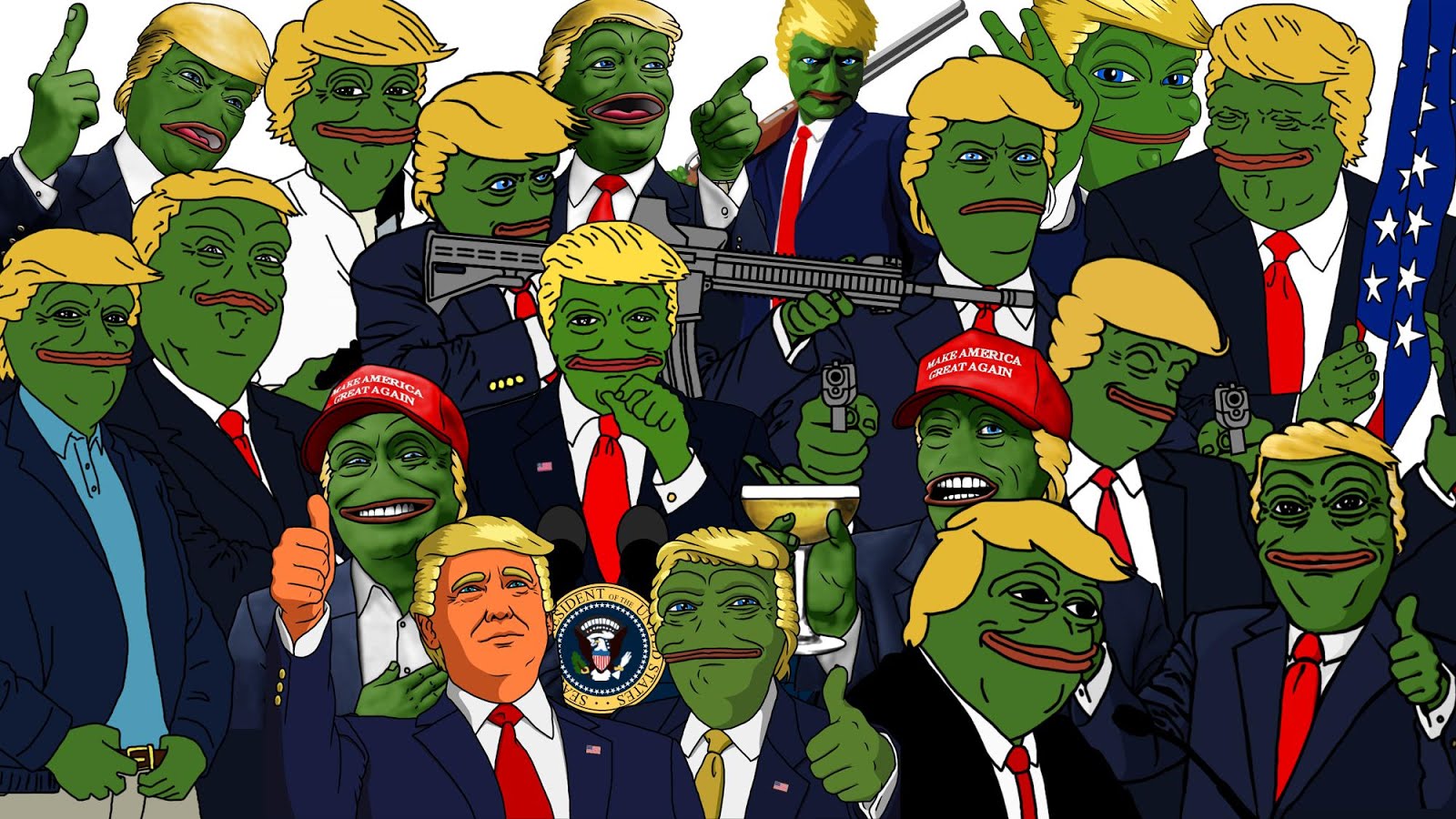
            Similarly, the popularity and transformation of Pepe the Frog can be attributed to the 3rd articulation of media ecologies. Since Pepe’s original creation from the comic series Boy’s Club by Matt Furie, the message that Pepe brings has varied (Know Your Meme, n.d.). The message is determined by the different variations and texts that are paired with the meme. The medium used to distribute Pepe and other memes of is social media platforms such as Facebook, Twitter, Instagram and etc. Similar to Luther, the most important attribution of Pepe’s understanding is the agents that have chosen to appropriate Pepe. These agents include the Alt-Right movement who have used Pepe as a symbol of, white “ethno-nationalist” (Herman, 2016). By Donald Trump’s son using Pepe the Frog as a political motif, it gained a lot more traction as the public tried to decide the underlying meanings behind the meme. Ultimately, this resulted in Pepe landing in the New York-based Anti-Defamation League's hate symbol database. This verdict is not irreversible and those who support Pepe can still be agents to restore it back to its original meaning.

Martin Luther Theses: Pepe the Frog

Throughout Martin Luther 95 theses, he had the aim of creating a community, a mode of affect, and a mode of communication, which would bind a new religious community together based on a particular theology (November 7th, 2016). The content of Luther media practices was religious in nature, but it acted as a starting point for creating the social and digital media forums we have now. Luther was the first to use media ecology for print. He wrote texts, creating a system where publishers who own the printing press, hand off their work to tradesmen who carry the texts made by the printing press, and sellers who distribute the texts (November 7th, 2016). Luther message became viral within his 95 theses, through the people continually circulating his message. Based on this factor, Luther theses can be correlated to the third articulation, concerning “how media artifacts and messages are brought into being and spread through a culture, community, or society”. Messages, such as Luther’s can be written, circulated, communicated, which is what we are seeing in a lot of social media platforms, particularly memes.


        One particular meme, correlating to this idea is the Pepe the frog meme that became increasingly viral during the US election. Pepe the frog is a character from the comic series Boys club. The symbol of Pepe already existed on the Internet for years, but it wasn’t until the election that it became a viral phenomenon. It was due to the Donald Trump Campaign, which turned this meme into a viral political meme, surrounded by negative implications. When trump tweeted the character of Pepe the frog it gained increasing popularity, particularly due to the ongoing attention he was receiving in the media. The meme became a symbol of social outcasts, which is what Trump supporters were made up of. This goes to show how memes have become a social and communal activity within a particular society. They have the capability of creating a sense of community for anyone to develop, and display their creativity, empathize with others, and find connection, communication and communion. It is a place of shared beliefs and values, which is a huge factor in its increasingly popularity. Trump supporters saw it as a way to get a message across and voice their opinion to the public, which in turn created a sense of community. Thus, memes are being continually created for people to develop and distribute messages out to people, just as Luther's 95 theses had a similar goal of getting his voice heard and having his message distributed to the public.


Standage, Tom. Writing on the Wall: Social Media -- the First 2,000 Years. New York, NY: Bloomsbury, 2013. Print.

The Relationship between Martin Luther and Donald Trump

From the outside Martin Luther’s 95 Theses that helped spark the Protestant Reformation in the 16th century and the spread of “Pepe the Frog” as a white ethno-nationalist meme in the context of Donald Trump’s 2016 Presidential campaign seem to have nothing in common. Nonetheless, when looked at together through the study of media ecologies we can see many similarities. Media ecologies are constructed through three articulations, however my focus of this study will be on the third articulation which concerns how media artifacts and messages are brought into being and spread through culture, community, or society, and is manifested in the spatio-temporal dynamics of relations to creativity and production, relations of distribution and circulation, and relations of consumption and reception. Although their messages were very different and took place in very different times, both of these media texts went viral through their ability to spread across time and space.

Martin Luther was seen as a media pioneer who made strategic use of the media of his time in order to spread and promote his message across society. Luther never could have imagined that simply by posting his 95 Theses on the door of the church that it would end up being spread across the nation at such a rapid speed in the form of a pamphlet. Luther quickly figured out how to exploit the media of his time. He “did not set out to split the Christian church, but that was the ultimate effect of the campaign he had started, in which the social sharing of his works played a vital role” (Standage, 2013, p. 53). Luther’s 95 Theses were considered a pioneering example of how media can be used by “would-be revolutionaries to coordinate their actions, synchronize opinion and rally others to support their cause” (Standage, 2013, p. 63). To summarize, Luther’s 95 Theses were spread from community to community through its ability to transgress space and time. They were produced by printers in the form of pamphlets, were circulated and distributed through printing thousands of copies and having those copies carried by merchants to other towns therefore being able to be consumed by anyone who has access to them and can read them. It is through this analyzation that Luther’s 95 Theses can be seen as similar to the spread of “Pepe the Frog” in relation to Donald Trump’s 2016 Presidential campaign.

Internet allows users to create and produce, circulate and distribute, and consume and receive information more quickly than anything before. With the click of a button, something can be put on the internet and will be on there forever. This allows things, such as memes, to go viral much quicker than Luther’s 95 Theses. Pepe the Frog was initially an innocent meme, however has now been “almost entirely co-opted by the white supremacists who call themselves the “alt-right”” through its relationship to the 2016 Presidential campaign of Donald Trump (Chan, 2016). Once Trump retweeted an image of Pepe the Frog that referenced him, the meme took on a totally new meaning as a white ethno-nationalist meme and lead to the “mass influx of pro-Trump Pepes” because “Pepe had been a symbol of the disenfranchised, social outcasts”, otherwise known as Trump’s “natural audience” (Williams, 2016). Furthermore, Pepe the Frog has become a symbol of white supremacy through “adding swastikas and other symbols of anti-Semitism and white supremacy” (Chan, 2016). The massive spread of Pepe the Frog as a representation of white supremacy lead to it being added to the Anti-Defamation League’s list of hate symbols (Mele, 2016). It is unfortunate for the original version and meaning of Pepe the Frog that it is now be considered a hate symbol simply because of the internet and people using their creative power to change the original meaning. In reference to the third articulation, Pepe the Frog as a symbol of Donald Trump’s campaign was quickly disseminated across the internet due to its extreme accessibility and easiness to share. The memes were created and produced by white supremacists and Trump supporters, were circulated and distributed over a variety of channels including social media platforms, television and news articles, and were consumed and received by anyone with access to these channels, particularly those in support of Trump.


Although these two examples of media texts going viral happened centuries apart and use very different media ecologies of print and social media, they are nonetheless both understood through their being spread throughout cultures, communities and societies. Both media texts exemplify the ability to transgress space and time in order to share and spread their message. Luther’s 95 Theses and Pepe the Frog are both manifested in the spatio-temporal dynamics of relations of creativity and production, relations of distribution and circulation, and relations of consumption and reception. 


References

Chan, E. (2016). Donald Trump, Pepe the frog, and white supremacists: an explainer. Hillaryclinton.com. 

Mele, C. (2016). Pepe the Frog Meme Listed as a Hate Symbol. New York Times. 

Standage, T. (2013). Writing on the wall: Social media -- the first 2,000 years. New York: Bloomsbury.

Williams, A. (2016). How Pepe the Frog and Nasty Woman Are Shaping the Election. The New York Times. 

Martin & Pepe Sitting in a Tree... S-H-A-R-I-N-G

Martin & Pepe sitting in a tree... S-H-A-R-I-N-G


In this week’s blog post, I will be analyzing Martin Luther’s 95 theses and the use of Pepe the Frog in the 2016 US election, within the context of the third articulation. Specifically, I will compare both texts through the relations of creativity and production, relations of distribution and circulation, and relations of consumption and reception. 

The use of Pepe the Frog in the 2016 US election and Martin Luther’s 95 theses both exhibit similar relations of creativity and production. Martin Luther was distraught over the sale of indulgences by the Catholic church to fund the construction of St. Peter’s Basillica. This was a cause Luther cared deeply for, and thus, sought to challenge the church with his own ideas. In order for his oppositional idea’s and opinion to have any effect, he first created his message. Once Luther’s message was clearly formulated to an effective manner, the printing press was then used to produce the message in various copies. This simple process, allowed the sharing and circulation necessary for Luther’s message to go viral.  

In comparison, the use of Pepe the Frog in the 2016 US election, embodies similar creative and production characteristics. Some of those following the 2016 US election felt strongly enough about it, to attempt to influence it with their own messages and media. The Pepe the Frog meme was first created, often with significant alterations of the original, and then produced through a computer or social media device. Similar to the printing press, the computer or social media device produces the message in various copies and allows sharing and circulation across the internet. The sharing of “presidential Pepe” memes through networks across the internet adheres to the same process as Luther’s 95 theses spreading across Europe. 

In regards to relations of distribution and circulation, “presidential Pepe’s” and Luther’s 95 theses bare a striking resemblance. The effects of Luther’s 95 theses were dependent on the rapid distribution and circulation within social networks, as a result of the printing press. Similarly, “presidential Pepe” memes were dependent on rapid distribution and circulation within various internet networks, facilitated by the computer or social media device. Both messages embody a sense of power through production and circulation. This is because certain messages are chosen over others to amplify. Luther’s theses and “presidential Pepe” memes created a sense of power through sharing, recommendation and copying. 

Finally, in regards to relations of consumption and reception, the use of Pepe the Frog in the 2016 US election and Martin Luther’s 95 theses again share similar qualities. Once Luther’s 95 theses were created, produced, distributed and circulated, he longer possessed control over their interpretation. While some were convinced by Luther’s work, others did not understand the context, and therefore the effects of Luther’s work was minimal at best. In the same way, “presidential Pepe” meme’s cannot protect their own interpretation and sometimes the humour, emotion or meaning is misunderstood by the person on the receiving end.

Works Cited

Standage, T. (2013). Writing on the wall: Social media -- the first 2,000 years. New York: Bloomsbury.

Williams, A. (2016). How Pepe the Frog and Nasty Woman Are Shaping the Election. The New York Times. 

Luther, Pepe and Accelerated Circulation

The distribution and circulation of media can seriously impact its intended emotions, meaning’s, and messages. I will be explaining how two media examples – Martin Luther’s 95 These and Pepe the Frog in regards to the 2016 Presidential Debate relate to the third articulation. The third articulation “concerns how media artifacts and messages are brought into being a spread through a culture, community, or society […….] ” (Herman). This specific articulation is viewed within social media on a daily basis. It is described as the circulation of information and media artifacts. Articulations and connections are what make up media ecologies and assemblages as they merge specific aspects towards the process of media production. We see in both Martin Luther’s 95 theses and Pepe the Frog the transformation of not only the production but also the changes that occur to media and responses. The way that meaning is interpreted through social practices such as “likes, retweets and reblogs”(Standage, 54).In the Tom Standage reading, we learn that Martin Luther’s 95 These, was the first message to get exposure in 1517- this was right after Luther’s incident regarding the Catholic church message. This theses gained exposure through the re- published and distributed pamphlets. His letter spread through community from one person to another becoming viral so quickly that he essentially forfeit the content which happens to be an issue we see today with social media and the internet – that content can be altered if it leaves the hands of the original content creator, a concept similar to “broken telephone”.The Internet meme, Pepe the Frog or “sad frog” was popular a few years ago and has recently became popular again with the Presidential debate. It arose whenTrump tweeted a version of the meme in regards to his campaign. Pepe began to have a negative impact on society when linked to Trump as these memes began to quickly come to life and go viral. I have attached another news article that expresses how the popular meme is now viewed as a hate symbol once associated with Donald Trump – “abusing the image of a cartoon character, one that might at first seem appealing, to harass and spread hatred on social media”(Elliot). Yes, this meme may have spread hatred but it also spread Trump and created more discussion about him during the campaign which may have lead to his success – he used social media as a step up knowing that society engages with memes. Therefore, this relates back to the third articulation and how a message can quickly circulate and become popular in a way that was unintended from its original meaning.http://www.ctvnews.ca/world/popular-trump-meme-pepe-the-frog-labelled-hate-symbol-1.3092496Herman, A.  (2016). Wilfrid Laurier University, Waterloo. 8 November 2016. Lecture. Standage, T. (2013). Writing on the Wall: Social Media- The First Two Thousand Years. p. 54 Williams, A. (2016). How Pepe the Frog and Nasty Woman Are Shaping the Election. The New      York Times.  


x